ICPF DKI Jakarta
Division of Investigation, Advocacy, Law & Human Rights – ICPF DKI Jakarta
Division of Investigation, Advocacy, Law & Human Rights
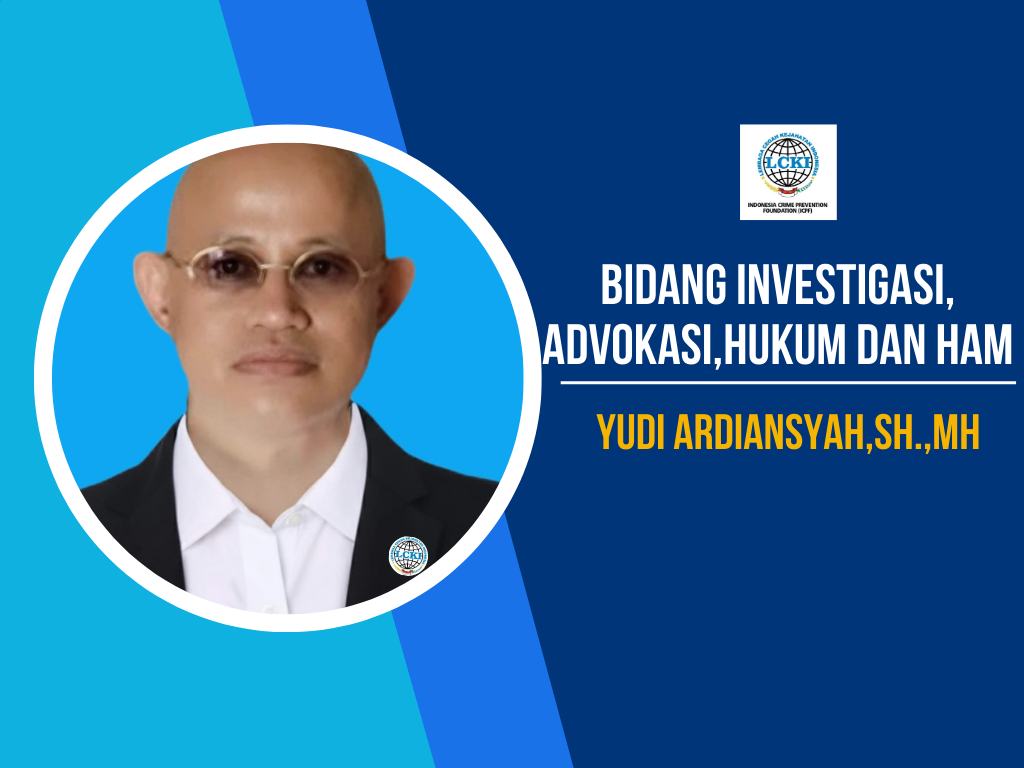
Name : Yudi Ardiansyah, SH, MH
ID No. : LCKI-JK-20251112-0013
ID No. : LCKI-JK-20251112-0013
This Standard Operating Procedure (SOP) for the Division of Investigation, Advocacy, Law & Human Rights of the Indonesian Crime Prevention Institute (LCKI) defines its role as the frontline in handling legal and human rights violations, while driving public advocacy and evidence-based investigations.
🎯 I.PURPOSE
To establish work guidelines for this division in conducting case investigations, legal advocacy, and human rights protection in a professional, transparent, and socially just manner.
💼 II. MAIN DUTIES
- Conduct investigations into alleged legal and human rights violations.
- Provide legal assistance to victims of crime or human rights violations.
- Prepare investigative reports and legal policy recommendations.
- Carry out public advocacy through campaigns, mediation, and strategic litigation.
- Establish cooperation with legal aid institutions, the National Human Rights Commission (Komnas HAM), and law enforcement agencies.
- Develop legal and human rights education for the community.
📋 III. WORK PROCEDURES
- Case Investigation
- Receive reports or initial findings from the community or LCKI internal sources.
- Verify and collect evidence (interviews, documents, field observations).
- Prepare case chronology and legal analysis.
- Store investigative data securely and confidentially.
- Legal Assistance
- Provide non-litigation legal aid (mediation, negotiation, consultation).
- Develop litigation strategies if necessary, in cooperation with partner advocates.
- Draft powers of attorney, lawsuits, or legal petitions according to procedures.
- Public Advocacy
- Prepare social campaigns related to legal and human rights issues.
- Conduct hearings with relevant institutions for case resolution.
- Draft policy briefs and recommendations for government authorities.
- Education and Outreach
- Organize legal and human rights training for communities and volunteers.
- Prepare educational modules based on real case studies.
- Disseminate information through social media and official LCKI publications.
📌 IV. RESPONSIBILITIES
- Ensure objectivity and integrity in investigation and advocacy processes.
- Safeguard the confidentiality of victim and whistleblower data.
- Submit activity reports to the Chairman and Secretary General.
- Represent LCKI in national legal and human rights forums.
📎 V. SUPPORTING DOCUMENTS
- Case and investigation report forms.
- Templates for legal assistance letters.
- Investigative reports and policy recommendations.
- Legal and human rights education modules.
- Archives of case documentation and legal assistance.